
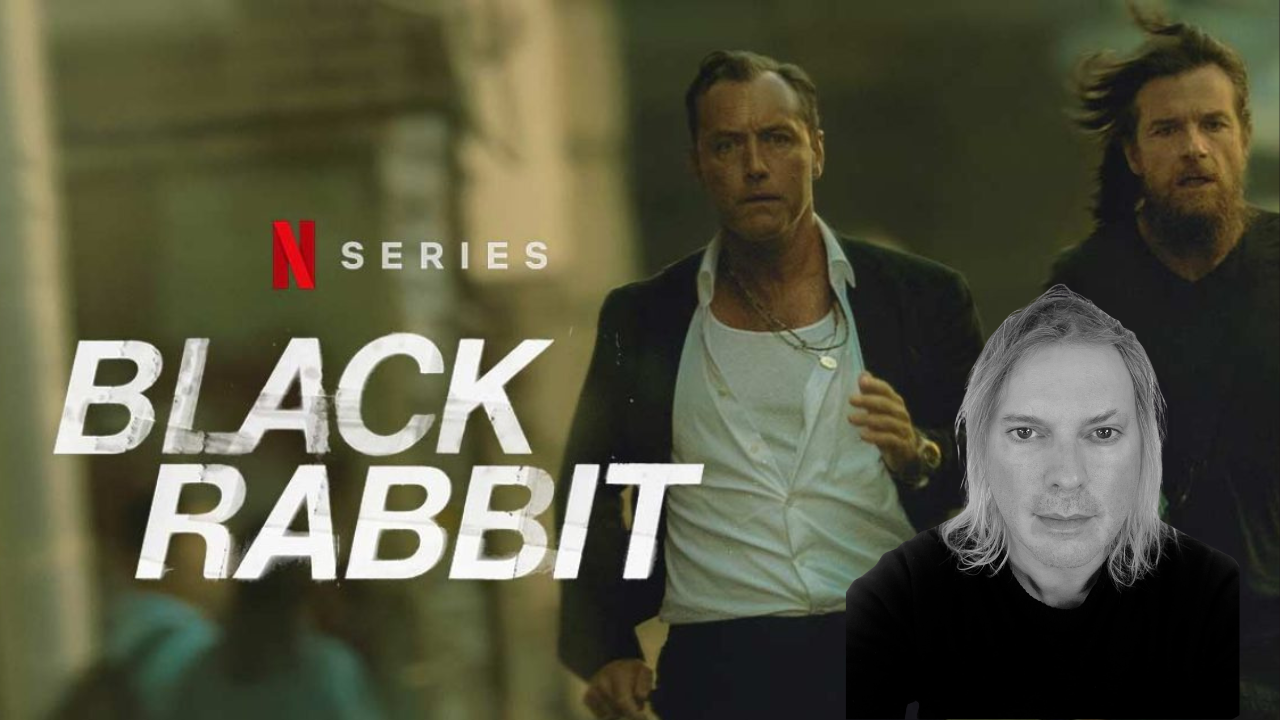
The Cinematography Podcast Episode 363: Peter Konczal, ASC
When cinematographer Peter Konczal, ASC began production on Netflix’s Black Rabbit, the goal was to make something gritty and intense. “It was never meant to really be a pretty show,” Konczal says. “It was always meant to feel more raw.” That rawness, though, was the product of an extremely deliberate and hands-on toolkit that he lead DP Igor Martinović built together.
They started with a custom LUT: low contrast, with a deliberately soft toe. The production’s lenses were detuned, and Martinović smoked the glass filters over candle flame. The crew nicknamed the result the “Smoke Martinović.” Konczal used a technique of placing cheap, scuffed and scraped clear and colored rulers into the matte box for foreground texture. It dirtied the frame in restaurant scenes and street exteriors alike. “They were literally the cheapest thing you could use,” he says. “Because they were junkier and we were going for a more deconstructed look, I think they worked wonderfully.”
To keep the show’s warm, brick-and-wood interiors from collapsing into a single muddy tone, the team built contrast through color rather than light level. Every fill source got a custom greenish-blue bounce. “We found it really gave us contrast of color in the space that could have otherwise just become very pallid and flat,” Konczal explains.
Early in the process, Konczal and Martinović studied Michael Mann’s The Insider together, drawn to its intentionally mismatched coverage. Instead of shot-reverse-shot, Konczal used a single or a profile. The asymmetry became a structural tool for Black Rabbit‘s central relationship: two brothers (Jude Law and Jason Bateman) who appear unevenly corrupt until the show reveals otherwise.
That visual unraveling was built into the season’s design from the start. Early episodes are more composed and dressed. Working with director Laura Linney, Konczal lit whole spaces rather than individual moments, flooding a window with soft light to suggest an overcast day rather than rigging the scene piecemeal. Performances could then unfold without interruption. He and Linney also introduced the use of tableaus to let tension settle in key scenes, a device that became one of the show’s recurring visual signatures. By the frantic finale, Konczal built the lighting into practical sources, replacing bulbs and even streetlights, making the scenes appear even darker and unlit.
The call for Black Rabbit came from Martinović directly, with executive producer Jason Bateman bringing in the two DPs based on their shared sensibility. “He brought us here for a reason,” Konczal says of Bateman’s hands-off approach once shooting began. “I want you to just go do your thing.”
Konczal has worked on some of the most influential shows of the last decade. On House of Cards, a dinner conversation with David Fincher produced a piece of advice Konczal still uses: “Everything’s behavior divided by time.” Stretching or compressing the screen time of an action becomes a tool for shaping audience perception, one he applied directly to an assassination-attempt sequence with director Robin Wright.
From there, a recommendation from cinematographer Dana Gonzalez, ASC brought him to Fargo. He learned how to integrate purposeful camera movement with “signature shots” that were earned through restraint elsewhere.
Konczal’s advice to emerging DPs is straightforward: shoot constantly, make shorts, and don’t be afraid to ask. “Find people that want to take chances with you.”
Find Pete Konczal:Instagram: @petekonczal_asc
Black Rabbit is streaming on Netflix.
Hear our previous episode with Igor Martinović on the documentary The Pigeon Tunnel
 CAMERA: Sony 8K Venice 2, 2:1 aspect ratio
LENSES: Rehoused Leica R Prime, Leica Hugos
Zooms: Angenieux 36-45, 28-76, 28-112, Leica 70-180
All lenses tuned for vintage/low contrast.
Close focus: Image and music library licensing company Artlist, which had recently expanded, laid off about 200 employees as the company pivots to what it calls an “AI-native” business.
Ben’s short end: Widow’s Bay on Apple TV, and the Instagram account @pano.dime, which features posts about things AI executives say.
Illya’s short end: Looking forward to seeing The Social Reckoning when it releases in October.
Sponsored by Hot Rod Cameras
Check out the new Betty Luminous Reflector at Hot Rod Cameras! The Betty Luminous is a full-spectrum light reflector designed to beautifully flatter human skin. Its fresnel-like directionality provides focused illumination while its gentle Gaussian falloff ensures a soft, natural look.
Sponsored by Greentree Creative: If you enjoy The Cinematography Podcast and you’re interested in growing or starting your own podcast, contact Alana Kode at Greentree Creative. Greentree Creative can help you with all of your digital marketing needs including podcast launch and creation, advertising, social media management and content creation.
SHOW RUNDOWN:
02:08 Close focus
13:15-01:03:31 Peter Konczal interview
01:03:47 Short ends
01:10:21 Wrap up/Credits
LIKE AND FOLLOW US, send fan mail or suggestions! Rate, review and subscribe on Apple Podcasts!
Email: editor@camnoir.com
Facebook:@cinepod
Instagram: @thecinepod
Threads: @thecinepod
Blue Sky: @thecinepod.bsky.social
Podcast Credits:
Producer: Alana Kode
All web and social media content written by Alana Kode
Host and editor in Chief: Illya Friedman
Instagram: @illyafriedman @hotrodcameras
Host: Ben Rock
Blue Sky: @benrock.com
Instagram: @bejamin_rock
Composer: Kays Al-Atrakchi
Check out Kays’ new YouTube Channel, Kays Labs, where he repairs old synthesizers.
Editor: Alana Kode
Subscribe to the Podcast on Apple Podcasts or click on the link below to listen here
Podcast: Play in new window | Download (Duration: 1:11:12 — 0.2KB)
Subscribe: RSS
